Business Card Website: What Is It, Who Needs One, and Is It Enough?
A business card website is 1–5 pages focused on one goal: turning visitors into contacts. Here's who it works for, what it should include, and when you'll need more.
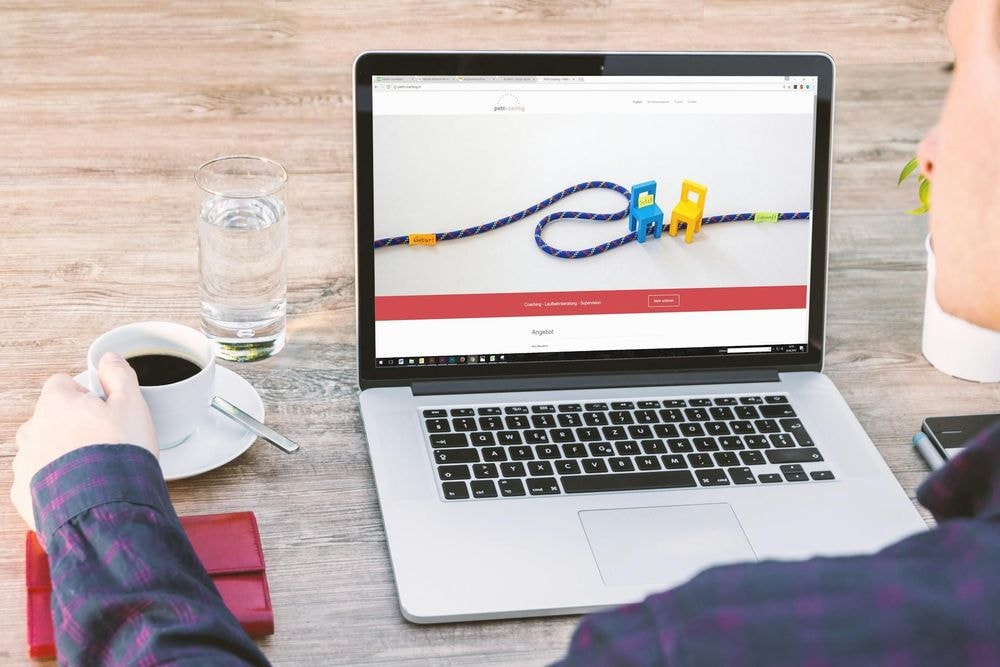
If you're a freelancer, local service provider, or small business owner trying to figure out what kind of website you actually need - you've probably come across the term "business card website." It sounds simple. But is it enough? And how does it compare to a full corporate site?
This guide explains exactly what a business card website is, what it should include, who it genuinely works for, where it falls short, and how much it costs to build and maintain. No fluff - just the information you need to make the right decision for your business.
What Is a Business Card Website?
A business card website is a small, focused website - typically one to five pages - designed to present the most essential information about a company, freelancer, or professional. Its primary goal is simple: tell visitors who you are, what you do, and how to contact you.
Think of it as the digital equivalent of a printed business card, but with more room to explain your offer, show your work, and build enough trust for a visitor to pick up the phone or fill out a form.
A business card website is not a blog, not an online store, and not a content platform. It doesn't need to be any of those things. What it needs to do is answer three questions in the first few seconds of a visit:
- What does this business do?
- Is this the right fit for me?
- How do I get in touch?
If it answers those clearly and quickly, it's doing its job.
What Should a Business Card Website Include?
A well-built business card website doesn't need many pages - but it does need the right elements. Missing even one of these can cause visitors to leave without taking action.
A clear headline on the homepage Not "Welcome to our website." Something specific: "Web design for small businesses in Chicago" or "Personal training for busy professionals." Visitors decide within seconds whether to stay - make it obvious what you offer.
A concise description of your services What exactly do you do? Who do you do it for? What results do clients get? This doesn't need to be long, but it needs to be specific. Vague descriptions like "comprehensive solutions" don't help visitors understand your value.
An About section People hire people, not companies. A short introduction - who you are, your experience, why you do what you do - builds the personal trust that converts visitors into inquiries. A real photo helps significantly.
Social proof Even two or three genuine client testimonials can meaningfully increase conversion. If you have case studies, before/after results, or logos of clients you've worked with, include them.
Contact details and a contact form Phone number, email, and a simple form - all on the same page or on a dedicated Contact page. Don't make people search for how to reach you.
A map or location indicator (for local businesses) If you serve a specific area, a Google Maps embed or a clear mention of your city helps both users and search engines understand your geographic relevance.
Basic SEO elements A properly written meta title and description for each page, clean heading structure (H1, H2s), and fast loading speed. These are the foundation of any site's search visibility.
Who Is a Business Card Website Best For?
A business card website is an excellent fit when your primary goal is visibility and trust, not online transactions or content marketing. It works especially well for:
Freelancers and independent professionals - designers, photographers, consultants, coaches, writers. You need a professional online presence that showcases your work and makes it easy to get in touch. A business card site does exactly this.
Local service businesses - plumbers, electricians, accountants, dentists, personal trainers, lawyers, cleaning services. Your clients find you on Google, check if you're legitimate, and call. A well-optimized business card site handles this entire journey.
Sole proprietors and small agencies - businesses where relationships drive sales and you're not trying to generate e-commerce revenue. The website's job is to support conversations, not replace them.
Businesses new to the web - if you've been operating entirely through referrals, social media, or physical presence, a business card website is the natural first step. It's faster to build, easier to maintain, and cheaper to run than a full corporate site.
Companies testing a new market or service - before investing in a full website, a focused business card site lets you validate demand and gather feedback with minimal upfront cost.
When a Business Card Website Is NOT Enough
A business card website has real limitations. Being honest about them upfront saves time and money later.
If you need to generate a significant volume of organic traffic, a five-page site will struggle. Search engines reward depth and topical authority - more pages, more content, more coverage of relevant topics. A business card site can rank well locally, but it can't compete for broad national or industry-wide keywords.
If content marketing is part of your strategy, you'll outgrow a business card site quickly. A blog, resource library, or case study section requires a larger content structure from the start.
If you sell products online, you need an e-commerce platform - WooCommerce, Shopify, or similar. A business card site doesn't support inventory management, payment processing, or order tracking.
If you have a complex offer with multiple services, multiple target audiences, or detailed technical specifications, five pages won't be enough to present it clearly.
If your business is growing fast, it's worth thinking ahead. A business card site built on a solid CMS can be expanded later - but if it's built on a page builder without flexibility, you may end up rebuilding from scratch.
Business Card Website vs. Other Website Types
How does a business card site compare to the alternatives? Here's an honest breakdown:
| Website Type | Pages | Primary Goal | Cost to Build | SEO Potential |
|---|---|---|---|---|
| Business card website | 1-5 | Visibility and contact | Low | Strong locally |
| Corporate website | 5-20 | Brand building, lead generation | Medium | Medium-High |
| Landing page | 1 | Single campaign or offer | Low | Very low |
| Blog / content site | 10-100+ | Traffic and authority | Medium | High |
| E-commerce store | Many | Online sales | High | High |
The key insight: a business card website punches above its weight for local visibility. A properly optimized five-page site can outrank a bloated, slow corporate site with twenty pages if the fundamentals are done right.
Can a Business Card Website Rank Well in Google?
Yes - with the right approach. Business card websites can achieve strong local search results without extensive content development. Here's why:
Fewer pages means easier optimization. With five pages, you can focus full attention on making each one technically sound, well-written, and properly structured. It's easier to maintain quality when there's less of it.
Local SEO favors focused sites. If you're a plumber in Denver or a graphic designer in Austin, a well-optimized business card site targeting local keywords can compete effectively with much larger sites. Google's local algorithm heavily weights proximity, relevance, and trust signals - not just page count.
Core Web Vitals are easier to achieve. Smaller, simpler sites typically load faster and have fewer technical issues. Speed is a confirmed ranking factor, and business card sites have a natural advantage here.
Google Business Profile amplifies the effect. A business card website linked to a fully optimized Google Business Profile creates a powerful local search combination. Your site provides the depth; your profile handles the map pack visibility.
What a business card website can't do for SEO: compete for high-volume informational keywords, support a content strategy, or build broad topical authority over time. For those goals, you need more pages and more content.
How Much Does a Business Card Website Cost?
Cost depends on how it's built and who builds it.
DIY website builders (Wix, Squarespace, Webflow): $15-$40/month. Fast to set up, no coding required. Limitations include template-driven design, limited SEO flexibility, and reduced uniqueness.
Freelancer-built site: $500-$3,000 one-time. More custom than a template, but quality varies significantly by developer. Good for simple sites with limited budget.
Agency-built site: $1,500-$6,000+ one-time. Professional design, proper SEO foundation, better long-term scalability. Best if the website plays an active role in your business.
Ongoing maintenance: $50-$200/month covers hosting, domain renewal, SSL, software updates, and basic technical support. More if you need regular content updates or performance monitoring.
One thing to keep in mind: a cheap business card website that doesn't show up in Google is just an expensive digital brochure. The build cost matters less than whether the site actually works - loads fast, ranks locally, and converts visitors into inquiries.
Business Card Website vs. Social Media Profile: Which Do You Need?
Many small businesses operate entirely through Facebook, Instagram, or LinkedIn pages and wonder if a website is even necessary. Here's the honest comparison:
Social media profiles:
- Free to create and maintain
- Built-in audience and discovery
- Platform controls your visibility and reach
- Content disappears quickly in feeds
- No control over design or branding
- Cannot rank in Google search results
Business card website:
- Annual cost for hosting and domain
- You own the platform - no algorithm changes affect it
- Appears in Google search results
- Permanent, searchable presence
- Full control over design, messaging, and user experience
- Builds long-term SEO authority
The practical answer for most small businesses: you need both. Your social profiles help with discovery and community. Your website provides the credibility layer - when someone finds you through a referral or Google search, your website is what converts them from a prospect into a client.
A social media profile alone doesn't pass the legitimacy test for many clients. A simple, well-built website does.
Frequently Asked Questions
What is a business card website? A business card website is a small website - usually one to five pages - designed to present essential information about a business or individual. It typically includes a description of services, an about section, contact details, and basic social proof like testimonials or a portfolio.
How many pages does a business card website have? Most business card websites have between one and five pages: Home, Services, About, and Contact are the most common. Some combine all information on a single scrolling page (often called a one-pager).
How much does a business card website cost? DIY builders cost $15-$40/month. A freelancer-built site runs $500-$3,000. An agency-built site typically costs $1,500-$6,000+. Ongoing maintenance (hosting, updates, security) adds $50-$200/month.
Can a business card website rank in Google? Yes - particularly for local search queries. A properly optimized business card site with fast loading speed, clean structure, and locally relevant content can rank well in Google without a large content operation. Pairing it with an optimized Google Business Profile significantly strengthens local visibility.
Is a business card website enough for my business? It depends on your goals. If you primarily need local visibility, a professional online presence, and a way for potential clients to contact you, a business card website is often more than enough. If you need content marketing, e-commerce, or broad SEO reach, you'll need something larger.
What's the difference between a business card website and a landing page? A landing page is a single-page site built for one specific goal - usually tied to a paid advertising campaign. A business card website is a permanent, multi-page presence meant to represent your business across multiple search and referral channels.
Thinking about building a business card website or wondering if it's the right fit for your business? Explore our website creation services or get in touch for a consultation - we'll help you figure out exactly what your business needs and what it doesn't.
Related articles
Website for Electricians and Plumbers - How to Get More Jobs from Google
What should a trade website include? How to rank in Google Maps and win more jobs from search? A practical guide with specific steps for electricians and plumbers.

Physiotherapy Website & SEO Guide: Get More Patients from Google
What does a physio clinic website actually need - and how do you rank on Google in 2026? A practical guide to SEO for physiotherapists.

Website or Google Maps Listing? What Local Businesses Actually Need in 2026
Limited budget, limited time - website or Google Business Profile first? An honest answer with real arguments, a clear priority order, and an action checklist.