What Should a Small Business Website Include?
A small business website is more than just a digital business card. Discover the essential elements a successful business website must include to build trust, attract customers from Google, and genuinely support sales.

A small business website today is much more than a digital business card. It is a sales tool, a customer acquisition channel, and the foundation of Google visibility.
Many business owners ask themselves:
What actually needs to be on a website so that it works, sells, and is SEO-friendly?
In this article, I’ll answer that question comprehensively. You’ll learn which elements are absolutely essential, what builds customer trust, and what mistakes small businesses make most often.
What role does a small business website play?
A small business website fulfills several key functions at the same time. If it fails at even one of them—it loses its potential.
The most important roles of a business website:
- attracting customers from Google (SEO)
- building brand credibility
- presenting the offer in a clear way
- generating inquiries and sales
- reducing the owner’s workload (answering customer questions)
A well-designed website works 24/7. A poorly designed one scares customers away in seconds.
What should the homepage of a small business website include?
The homepage is the most important page of the entire website. This is where users decide whether they stay or leave.
Key elements of an effective homepage
1. Clear value proposition (above the fold) Within 3-5 seconds, users must understand:
- what you do
- who you help
- why they should choose you
Example:
“We build websites for small businesses that want to attract customers from Google.”
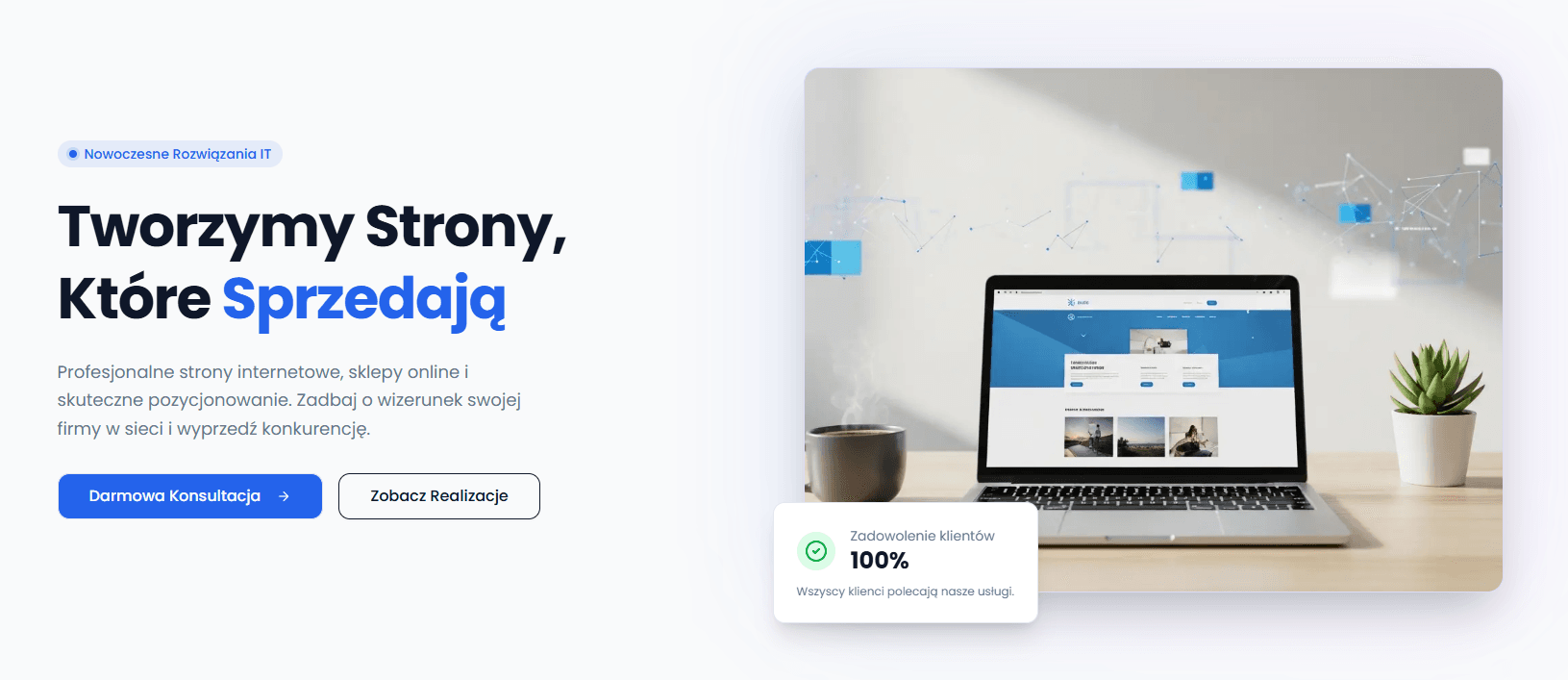
2. Strong CTA (Call to Action)
Every homepage should include a CTA, such as:
- “Book a free consultation”
- “Request a quote”
- “Call now”
A CTA should be:
- visible
- specific
- repeated (several times on the page)
3. Short overview of your offer
Don’t describe everything in detail. The homepage should encourage users to go deeper.
What works best:
- a list of 3-6 main services
- links to individual service pages
- short descriptions (1-2 sentences)
4. Trust elements
Users must feel they’ve landed on a real, trustworthy business.
Consider adding:
- customer reviews
- logos of companies you’ve worked with
- certifications or experience
- real photos (not stock images)
What should service pages look like?
Service pages are the heart of a sales-focused website. This is where the decision to get in touch is made.
Essential elements of a strong service page
1. One service = one page
From an SEO and user perspective:
- each service should have its own page
- each page should target one specific search intent
Examples:
- “WordPress websites”
- “Local SEO”
- “E-commerce websites”
2. Benefits-focused language, not technical jargon
Customers don’t buy technology. They buy results.
Instead of:
“Responsive website based on a CMS”
Write:
“A website that works perfectly on mobile and attracts customers from Google”
3. Clear service structure
A well-optimized service page includes:
- H2 and H3 headings
- short paragraphs
- bullet lists
- an FAQ section
- a CTA at the end
4. Pricing or price ranges
Lack of pricing often reduces conversion rates. Even approximate ranges:
- filter out unqualified leads
- build trust
- shorten the sales process
Why is the “About Us” page so important?
It’s one of the most visited pages on a website. Customers want to know who they’re trusting with their money.
What should an “About Us” page include?
1. Story and mission
It doesn’t have to be long. It should be real and human.
- why the company was created
- who you help
- what values matter to you
2. Information about the owner / team
People buy from people.
Worth adding:
- a photo of the owner or team
- a short bio
- experience or specialization
3. Credibility elements
- years of experience
- number of completed projects
- concrete achievements
- client testimonials
What SEO content should a small business website include?
Without SEO content, a website won’t be visible in Google. Even the best design can’t replace that.
Key SEO elements
1. Service descriptions optimized for keywords
Each service should match real user search queries.
Example phrases:
- “website for a small business”
- “services [industry] + city”
- “web design [location]”
2. Business blog
A blog provides:
- additional traffic from Google
- authority and expertise
- sales support
Blog topic ideas:
- guides and tutorials
- answers to customer questions
- comparisons
- case studies
3. Proper heading structure
Every page should have:
- one H1 heading
- logical H2 and H3 headings
- natural keyword usage
What technical elements are essential?
Technical foundations are critical for SEO and user experience.
Absolute technical minimum
1. Responsiveness (mobile-first) Your website must work perfectly on:
- smartphones
- tablets
- laptops
2. Page speed
A slow website = fewer customers.
Key factors:
- image optimization
- quality hosting
- clean code
3. SSL certificate
An address starting with https:// is now a standard.
Without it:
- Google reduces trust
- users hesitate to submit forms
4. Contact form and business details
Every website should clearly display:
- phone number
- email address
- contact form
- business address (if local)
What mistakes should small businesses avoid?
The most common mistakes I see in practice:
- no clear CTA
- vague, generic copy
- lack of local SEO
- overloading the site with animations
- outdated content
- copying text from other websites
A website is not a one-time project. It’s a tool that needs ongoing development.
Summary - what should an effective small business website include?
A strong small business website should:
- clearly communicate the offer
- be optimized for SEO
- build trust
- guide users toward contact
- be fast and mobile-friendly
If any of these elements fail—the website loses its potential.
All these elements are best planned as part of a broader strategy. You can find complete step-by-step instructions in our article How to Create a Website That Sells - Complete 2026 Guide
Want a website that actually works?
If you:
- are planning a new website
- have a site that doesn’t generate inquiries
- want to improve SEO and conversions
Book a free consultation or request a quote. I’ll analyze your website and show you specific solutions tailored to your business.
Additionaly, please check our offer page.
Related articles
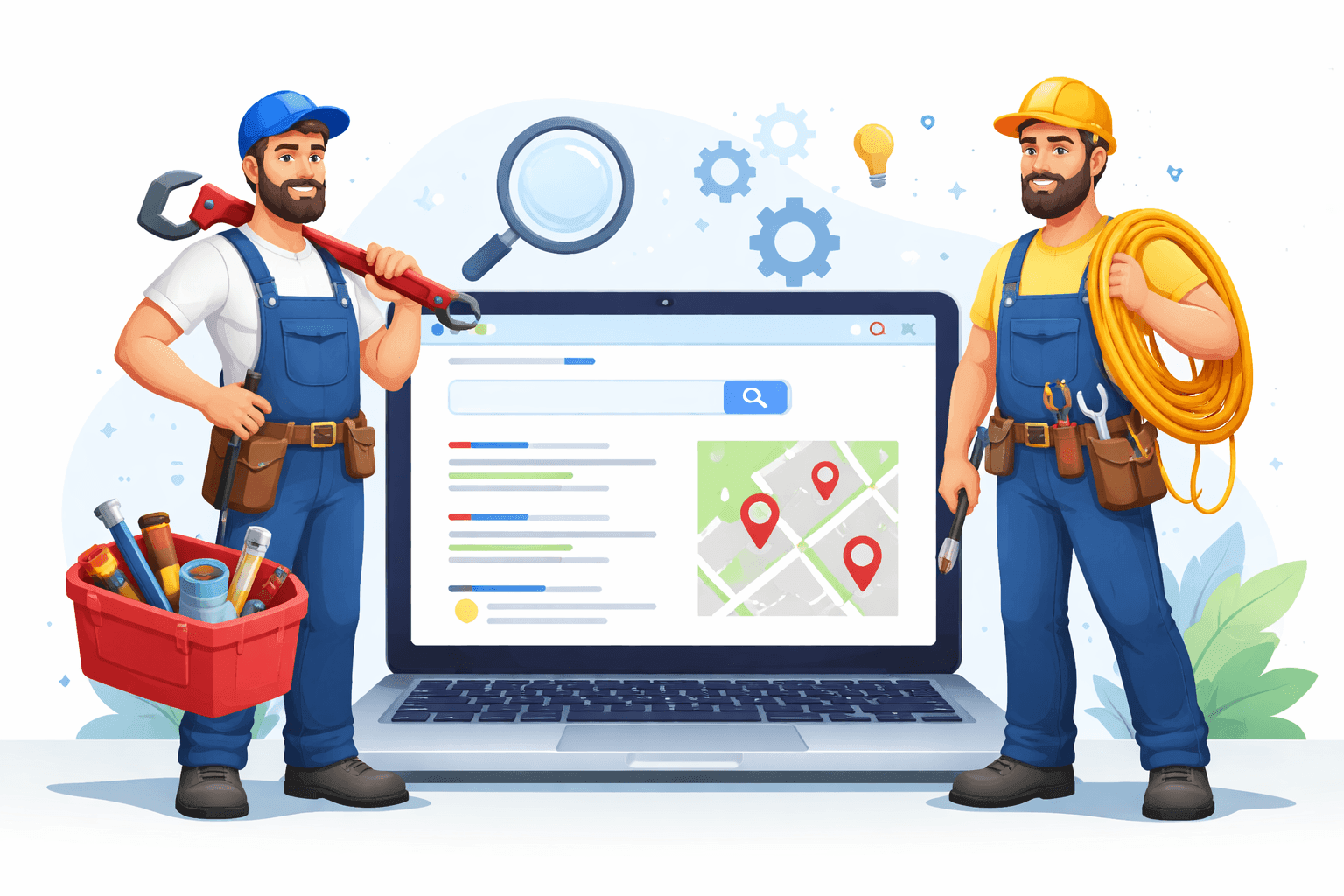
Website for Electricians and Plumbers - How to Get More Jobs from Google
What should a trade website include? How to rank in Google Maps and win more jobs from search? A practical guide with specific steps for electricians and plumbers.

Physiotherapy Website & SEO Guide: Get More Patients from Google
What does a physio clinic website actually need - and how do you rank on Google in 2026? A practical guide to SEO for physiotherapists.

Website or Google Maps Listing? What Local Businesses Actually Need in 2026
Limited budget, limited time - website or Google Business Profile first? An honest answer with real arguments, a clear priority order, and an action checklist.