Is it worth building a website yourself?
Is it worth building a website yourself? Learn the real costs, benefits, SEO impact, and limitations of DIY websites versus professional solutions in 2026.
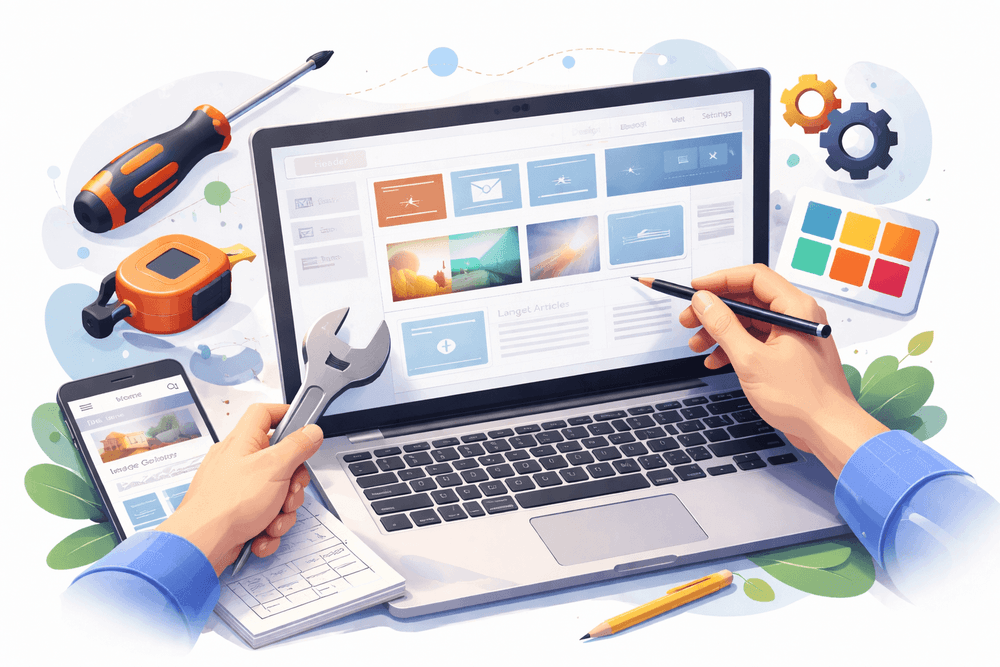
The decision to create a website is now one of the key steps in building a brand, a business, or a personal project. Many people ask themselves whether it is worth building a website on their own or if it is better to hire professionals from the start. On one hand, we have easy access to website builders, tutorials, and ready-made templates. On the other, user expectations and Google’s algorithms are becoming more demanding every year.
In 2026, a website is no longer just an online business card. It is a sales, communication, and trust-building tool. If you are interested in a strategic approach to website creation, it is worth checking out this complete guide: How to Create a Website That Sells - The Complete Guide.
Below, I break this topic down into its core elements. No myths, no scare tactics - just practical examples and a realistic look at SEO, time, costs, and results.
Does building a website yourself really save money?
At first glance, the answer seems obvious. If you build the website yourself, you do not pay an agency or a freelancer. In practice, however, these savings are often only apparent. The time you spend learning tools, testing solutions, and fixing mistakes also has real value.
You also need to account for the cost of a domain, hosting, paid themes, plugins, and often advertising, because a website without SEO simply does not sell. If you are counting every dollar, DIY can be a good starting point, but it is rarely a long-term solution.
It is worth looking at the bigger picture - not just how much you spend, but how much you can realistically earn thanks to your website.
What are the biggest advantages of building a website on your own?
Creating a website yourself has its benefits, especially at the beginning. It offers flexibility and helps you better understand your own business. For many people, it is also a way to learn and develop new skills.
The most commonly mentioned advantages include:
- full control over content and updates
- no costs for hiring a contractor
- the ability to launch a simple website quickly
- learning the basics of SEO, UX, and marketing
- satisfaction from building something on your own
If you are creating a blog, a hobby website, or testing a business idea, this approach can make sense. Problems arise when the website is expected to sell and compete in Google search results.
Can a DIY website rank well in Google?
This is one of the most frequently asked questions and also the most controversial one. In theory, yes - a self-built website can rank in Google. In practice, however, SEO in 2026 is much more than inserting a few keywords.
Website structure, loading speed, Core Web Vitals, proper headings, internal linking, and user intent all matter. Website builders often limit technical possibilities, and beginners unknowingly make mistakes that are difficult to fix later.
If SEO is meant to be one of your main customer acquisition channels, it is worth considering professional support. You can find a strategic and professional approach in our services.
What mistakes do people most often make when building a website themselves?
Most issues do not come from a lack of effort, but from a lack of experience. As a result, the website may look visually fine but fails to fulfill its business purpose.
The most common mistakes include:
- no clearly defined goal for the website
- focusing on design instead of conversions
- overly long and chaotic content
- lack of mobile optimization
- poorly designed CTA or no CTA at all
These mistakes cause users to enter the site and simply leave. No contact, no purchase, no brand recall.
When does DIY make sense, and when is it better to hire professionals?
There is no single right answer for everyone. Everything depends on your goals, budget, and stage of business growth. The table below will help you quickly assess which option is more cost-effective for you.
| Criterion | DIY Website | Professionally Built Website |
|---|---|---|
| Initial cost | Low | Higher |
| Time to launch | Long (learning + testing) | Short and predictable |
| SEO | Limited | Planned from the start |
| Scalability | Low | High |
| Sales effectiveness | Depends on knowledge | Designed for conversion |
If your website is meant to be your main source of leads or sales, investing in a professional build usually pays off faster than expected.
Can you combine DIY website building with professional support?
This is an increasingly popular solution and often the best compromise. You can prepare content, structure, or wireframes yourself, while leaving technical and strategic elements to experts.
This approach offers:
- control over brand communication
- partial budget savings
- professional SEO and UX
- solid foundations for future website growth
In practice, many businesses start with DIY and then come back for fixes. It is better to approach this consciously and plan the website from the beginning so that it actually sells.
Summary - is it worth building a website yourself?
If your goal is a simple online presence or learning experience, building a website yourself can be a good start. However, if you expect real business results, Google visibility, and conversions, DIY quickly shows its limitations.
A website is an investment, not an expense. A well-designed site works for you 24/7, attracts customers, and builds credibility.
If you want to discuss your situation, assess your website’s potential, or get a concrete quote, feel free to get in touch.
It is better to make the right decision once than to fix it several times later.
Related articles
Website for Electricians and Plumbers - How to Get More Jobs from Google
What should a trade website include? How to rank in Google Maps and win more jobs from search? A practical guide with specific steps for electricians and plumbers.

Physiotherapy Website & SEO Guide: Get More Patients from Google
What does a physio clinic website actually need - and how do you rank on Google in 2026? A practical guide to SEO for physiotherapists.

Website or Google Maps Listing? What Local Businesses Actually Need in 2026
Limited budget, limited time - website or Google Business Profile first? An honest answer with real arguments, a clear priority order, and an action checklist.