Is SEO Still Worth It in 2026? (Honest Answer + What Actually Works)
SEO isn't dead — but it's changed. Here's what actually works in 2026: AI content, E-E-A-T, Core Web Vitals, and why organic traffic still beats paid ads long-term.
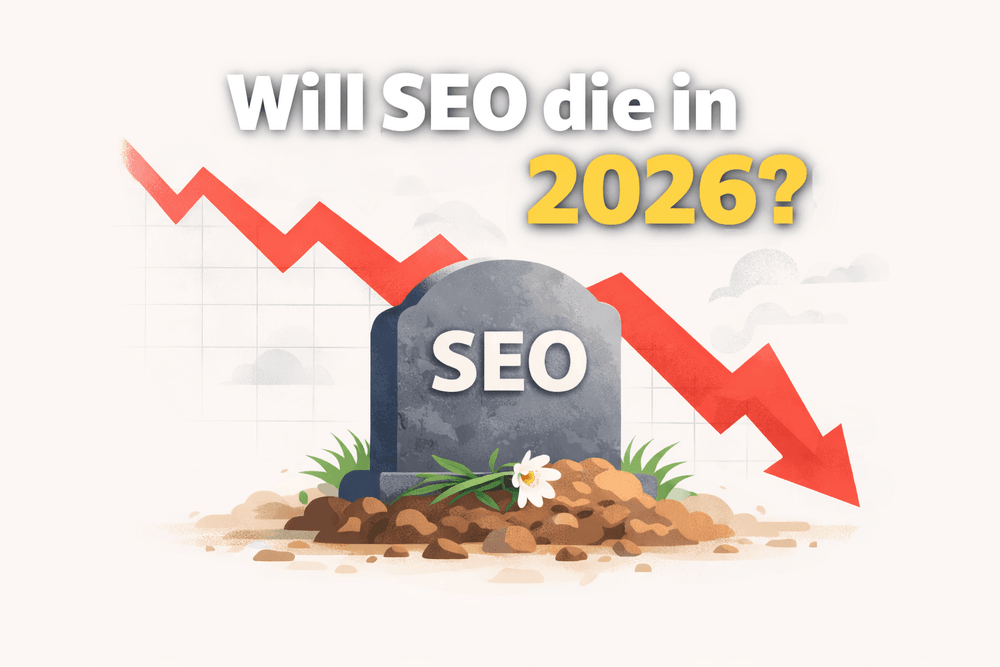
Every few years, someone declares SEO dead. In 2011 it was social media that was supposed to replace it. In 2019 it was voice search. In 2023 it was ChatGPT. And yet here we are in 2026 - and organic search still drives more website traffic than any other channel on the internet.
But that doesn't mean SEO in 2026 looks the same as it did five years ago. AI Overviews, zero-click searches, and Google's evolving understanding of content quality have changed the game significantly. The question isn't just "is SEO still worth it?" - it's "what kind of SEO is still worth it?"
This article gives you an honest, data-backed answer.
The Numbers First: Is Organic Search Still Relevant?
Before getting into strategy, let's look at what the data actually says.
Organic search holds over 53% of all website traffic, making it the largest single source of traffic - ahead of paid ads, social media, and direct visits combined. Google data confirms that more than 90% of online experiences still begin with a search engine.
What about paid ads vs. organic? 95% of all search clicks go to organic results - paid ads account for just 6%. Users don't just prefer organic results - they actively skip ads, especially in high-trust categories like professional services, healthcare, and B2B.
And ROI? 27% of businesses reported SEO was their best-performing marketing channel in terms of ROI at the beginning of 2026 - outperforming paid social, organic social, and even email marketing.
The data is clear: organic search is not going away. But how you compete in it has changed substantially.
What Has Actually Changed in SEO Since 2024
AI Overviews and Zero-Click Searches
This is the biggest shift in search behavior right now. Google's AI Overviews appear at the top of many search results, answering questions directly without the user ever clicking through to a website. Zero-click searches - where users get the information they need directly from the results page - are becoming increasingly dominant in 2026.
This doesn't mean SEO is less important. It means the goal of SEO is shifting. Appearing inside an AI Overview is itself a form of visibility and brand authority. Businesses optimized for E-E-A-T (more on this below) are far more likely to be cited as sources in AI-generated answers.
Google Trusts Fewer Sites Than Before
Core updates in 2024 and early 2025 significantly reduced the visibility of thin, AI-generated, or low-authority content. Signals tied to experience, author credibility, content depth, and topical authority now play a defining role in rankings - changes that favor brands investing consistently in SEO rather than those chasing short-term tactics.
Rankings Matter More Than Ever - But at the Top
Position 1 gets 10x more clicks than position 10. And 94% of pages get zero traffic. The gap between page 1 and page 2 has always been significant, but with AI Overviews pushing organic results further down the page, visibility below the top positions is eroding faster than ever.
E-E-A-T: The Factor That Now Separates Winners From Losers
If there's one concept that defines SEO success in 2026, it's E-E-A-T: Experience, Expertise, Authoritativeness, and Trustworthiness.
Google introduced this framework to combat the flood of low-quality content - and in 2026, it's more central to rankings than ever. Here's what it looks like in practice:
Experience means your content reflects real, first-hand knowledge. An article about website maintenance written by someone who has maintained hundreds of websites ranks higher than one scraped together from other articles.
Expertise means demonstrating depth. Thin overviews don't cut it. Content that shows genuine understanding of a topic - with specific examples, nuance, and practical insight - performs better.
Authoritativeness is about your reputation within your niche. Who links to you? Are you cited as a source? Do other authoritative sites mention your brand?
Trustworthiness covers technical signals: HTTPS, accurate contact information, consistent business details, privacy policy, and a track record of reliable content.
For small businesses, building E-E-A-T doesn't require a massive content operation. It requires consistency, specificity, and a clear point of view - things that AI-generated filler content cannot replicate.
Is SEO Worth It for Small Businesses Specifically?
This is where the honest answer gets more nuanced. SEO timelines and difficulty vary enormously by industry and keyword competition.
Where SEO works extremely well for small businesses:
Local SEO is arguably the highest-ROI channel available to any business with a physical location or service area. 77% of users still use Google to find information on local businesses, and almost two-thirds of smartphone users actively reach out to businesses directly from local search results. 28% of local searches result in a purchase - both online and offline.
If you're a service business - web design, legal, accounting, trade services, healthcare - local SEO is not optional. It's where your clients are looking.
Where SEO is harder for small businesses:
Competing for broad national or global keywords against established, high-authority domains is genuinely difficult without a significant content and link-building investment. A new business trying to rank for "website maintenance cost" against major agencies will take time - 6 to 12 months minimum, often longer.
The smart move is to start with specific, lower-competition long-tail keywords where you can realistically win, build authority over time, and work up to more competitive terms.
SEO vs. Paid Ads: Which Should You Choose?
The honest answer is: they serve different purposes, and the best businesses use both.
| - | SEO (Organic) | Paid Ads (PPC) |
|---|---|---|
| Time to results | 3-12 months | Immediate |
| Cost structure | Investment upfront, compounds over time | Ongoing spend - stops when budget stops |
| Trust level | Higher - users prefer organic results | Lower - many users skip ads |
| Long-term value | Builds a lasting asset | No residual value when paused |
| Best for | Steady, compounding growth | Quick visibility, promotions, testing |
Think of it this way: paid ads are like renting a storefront - visible while you're paying, gone when you stop. SEO is like buying the building - a real asset that keeps working after the initial investment.
The U.S. International Trade Administration notes that organic search can deliver double the ROI compared to paid search for driving website traffic. But that ROI takes time to materialize. For most businesses, a combination - using paid ads to generate immediate traffic while SEO builds long-term visibility - is the most practical approach.
What SEO Actually Looks Like in 2026
The tactics that worked in 2020 - keyword stuffing, mass link building, thin content - don't just fail now, they actively hurt rankings. Here's what actually drives results:
1. Content That Answers Real Questions Thoroughly
Content that answers real questions, shows experience, and solves one clear problem per page performs best in 2026. This means going deeper than your competitors on topics within your niche, not just producing more articles.
The ideal is building topical authority: instead of one article about "website costs," you cover website creation costs, maintenance costs, redesign costs, DIY vs. agency costs - creating a web of interconnected, mutually reinforcing content that signals expertise to Google.
2. Technical SEO Fundamentals
Core Web Vitals - page load speed, visual stability, and interactivity - remain confirmed ranking factors. A slow, unstable website loses rankings regardless of how good the content is. Key technical priorities for 2026:
- Fast loading on mobile (LCP under 2.5 seconds)
- No layout shifts during page load (CLS under 0.1)
- HTTPS with a valid SSL certificate
- Clean site architecture with proper internal linking
- No broken links or redirect chains
3. Genuine Backlinks From Relevant Sources
Link building hasn't gone away, but quality matters far more than quantity. Ten links from relevant, authoritative industry sites are worth more than a hundred links from generic directories. The most sustainable approach is creating content that earns links naturally - data, original research, practical guides, and expert opinions that other sites want to reference.
4. Local SEO for Service Businesses
If you serve a specific geographic area, your Google Business Profile is as important as your website. Key elements:
- Complete and accurate business information
- Regular posts and photo updates
- Responding to all reviews, positive and negative
- Consistent NAP (Name, Address, Phone) across all directories
- Location-specific pages on your website
5. Optimizing for AI Overviews
This is the new frontier. To appear inside Google's AI-generated answers:
- Structure content with clear questions and direct answers
- Use headers that mirror how people actually ask questions
- Provide specific, factual information rather than vague generalities
- Build the E-E-A-T signals that make Google trust your content as a source
How Long Does SEO Take to Show Results?
SEO typically shows results within 3-6 months, depending on competition, content quality, and consistency. Local SEO may show faster results than national keywords.
A more realistic breakdown:
- Month 1-2: Technical fixes, initial content creation, Google Search Console setup
- Month 3-4: First rankings appear for long-tail keywords; early organic visits
- Month 6: Meaningful organic traffic if content and technical foundation are solid
- Month 12+: Compounding results as authority builds and more content ranks
SEO is not a campaign with a start and end date. It's an ongoing process. Businesses that treat it as a one-time project consistently underperform compared to those that invest steadily over time.
The Real Risk: Not Doing SEO at All
Here's what's often missed in the "is SEO worth it?" conversation: the cost of not doing SEO.
Every month without SEO investment is a month your competitors are building authority you'll need to overcome later. The SEO industry is growing from $82.3 billion in 2023 to a projected $143.9 billion by 2030. That growth isn't driven by companies wasting money - it's driven by measurable returns.
The businesses struggling with SEO in 2026 are usually those that:
- Invested in low-quality content or link schemes in the past and are recovering
- Started too late and are catching up to entrenched competitors
- Expect 90-day results from a 12-month strategy
The businesses winning with SEO are those that started 12-24 months ago and kept going consistently.
Frequently Asked Questions
Is SEO still effective in 2026? Yes - organic search drives over 53% of all website traffic globally, and 27% of businesses report it as their best-performing marketing channel by ROI. The tactics have changed, but the fundamentals - quality content, technical health, and authority signals - still determine rankings.
Is SEO dead because of AI? No. Every AI platform combined sent 1.13 billion users to the top 1,000 global domains in 2025. Google sent 191 billion. AI tools are changing how people search, but Google remains the dominant source of web traffic by an enormous margin.
How long does SEO take to work? Expect 3-6 months to see initial results, 6-12 months for meaningful organic traffic, and 12-24 months for significant ROI. Local SEO can show results faster, often within 2-3 months.
Is SEO worth it for small businesses? Yes - especially local SEO. For service businesses operating in a specific city or region, local search optimization is one of the highest-ROI investments available. National or global SEO requires more time and budget but compounds significantly over time.
Should I choose SEO or paid ads? Both serve different purposes. Paid ads deliver immediate visibility; SEO builds a long-term asset. For most businesses, the most effective approach combines both: paid ads for quick wins while SEO builds lasting organic traffic.
What SEO tactics work in 2026? Thorough, experience-driven content, strong E-E-A-T signals, clean technical foundations, genuine backlinks, and Google Business Profile optimization for local businesses. Tactics like keyword stuffing, mass link building, and thin AI-generated content actively hurt rankings.
Want to improve your website's visibility in Google search? Explore our SEO and website services - or get in touch to discuss what's actually holding your site back.
Related articles
Google Business Profile - How to Set Up and Optimise Step by Step (2026)
Complete guide to Google Business Profile - from creating your account through every section to a monthly routine that improves your Google Maps ranking.
Why Does My Competitor Rank Higher on Google Maps? 7 Reasons (and How to Fix Them)
Your competitor shows up in Google Maps and you don't? Here are 7 specific reasons why - and exactly what to do to fix each one.
How to Show Up in AI Search Results: GEO & AEO Guide for 2026
If you're not cited in ChatGPT or Perplexity, you're invisible to millions of potential clients. Here's exactly what to do about it - no fluff, just tactics.