Vibe Coding: What It Is, What It Can't Do, and Whether It Will Replace Web Developers
AI builds websites in 60 seconds. Sounds like the end of web agencies? Here's what vibe coding actually delivers - and what it silently destroys - before you trust it with your business.

Imagine typing into ChatGPT: "Build me a website for my physical therapy clinic. Clean, professional look. Sections for services, pricing, testimonials, and an online booking form." And within 60 seconds, you have a complete, published website. No developer. No agency. No invoice for thousands of dollars.
Sounds like a revolution? For many business owners, it sounds like the end of professional web development. For developers, it sounds like a threat to their livelihood.
The reality is considerably more complicated. And more interesting.
What Is Vibe Coding?
The term "vibe coding" was coined by Andrej Karpathy - co-founder of OpenAI and former head of AI at Tesla - in February 2025. On X, he wrote: "There's a new kind of coding I call vibe coding, where you fully give into the vibes, embrace exponentials, and forget that the code even exists."
The defining characteristic is accepting AI-generated code without fully understanding, reading, or verifying it. You describe the outcome you want in natural language - like a conversation with a human - and AI handles the technical implementation.
Collins English Dictionary named "vibe coding" the word of the year for 2025. Merriam-Webster added it to their online dictionary as slang for "writing computer code in a somewhat careless fashion, with AI assistance."
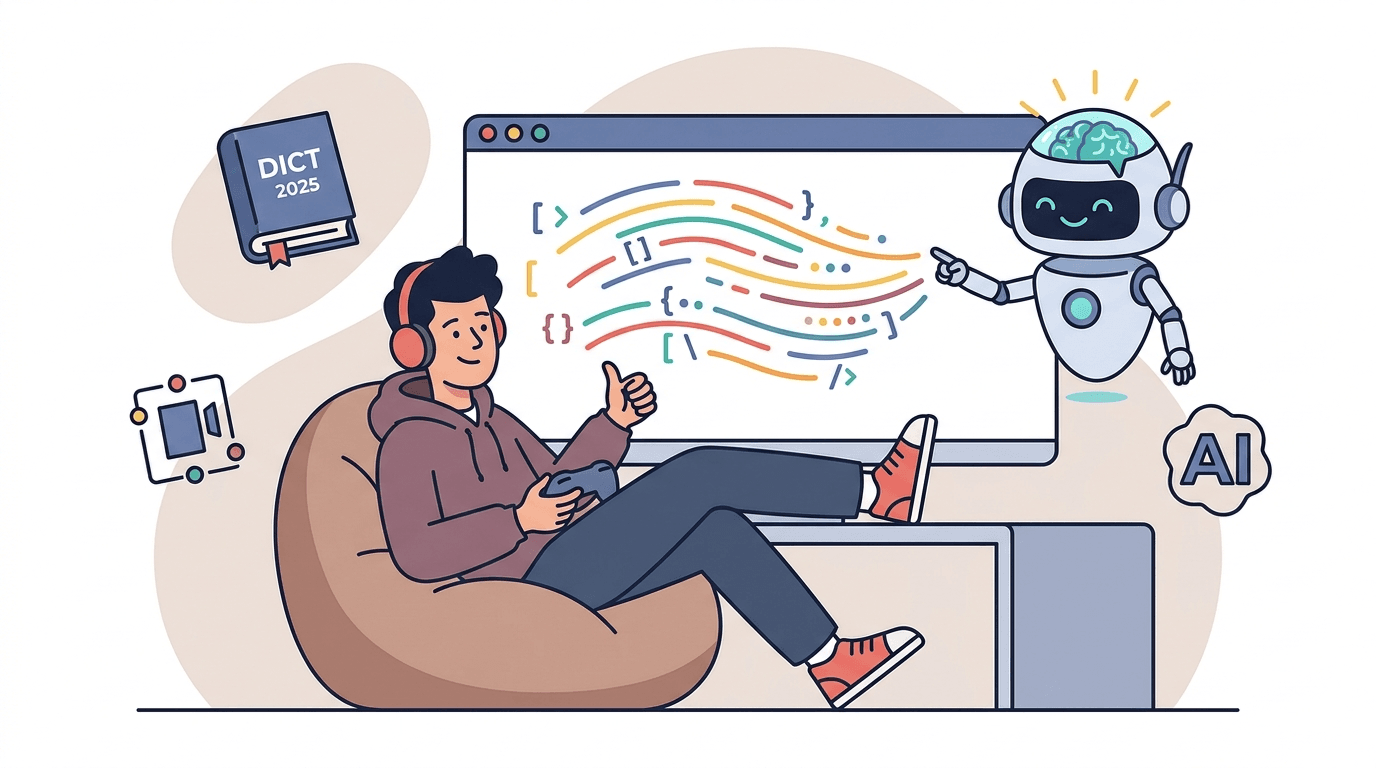
In the context of websites, vibe coding works like this: you describe what you want to build, and tools like Framer AI, Wix AI, Webflow AI, Base44, Bolt, v0 (Vercel), or Lovable generate a complete, deployable site. Every major tech company is entering this space - Google, Microsoft, Adobe, and dozens of startups are racing to own this market.
How It Works in Practice
A typical vibe coding workflow for a website:
Step 1 - Describe your vision: "I want a website for a personal injury law firm in Chicago. Dark, authoritative color scheme. Sections: practice areas, attorney profiles, case results, client testimonials, free consultation form."
Step 2 - AI generates the site: Within seconds or minutes, a complete website appears - with generated copy, layout, color scheme, and forms.
Step 3 - Iterate through conversation: "Make the colors less dark." "Add a FAQ section." "Move the contact form above the testimonials."
Step 4 - Publish: One click - the site is live.
It sounds perfect. And for a specific class of projects, it genuinely works. But the gap between "works in a demo" and "works for a business" is where the real story is.
What Vibe Coding Does Well
A fair assessment: vibe coding is a genuine revolution for certain use cases.
Prototyping and concept validation. Before investing $5,000-$15,000 in a professional site, you can verify your concept visually in an hour. That's real value.
Simple informational sites with low stakes. A local barber, a small yoga studio, a neighborhood handyman - if the goal is a page with contact information, hours, and photos, vibe coding may be entirely sufficient.
Short-lived landing pages for ad campaigns. A page supporting a specific Google Ads campaign that runs for three months - AI can generate it faster and cheaper than an agency.
Democratization of access. A course creator, a photographer, a freelance coach - people who could never afford a professional website now have something. That's genuinely valuable.
Where Vibe Coding Fails - and Why It Matters for Your Business
This is where the real conversation starts. Because at demo stage, vibe coding looks remarkable. The problems emerge when the site meets real users, real Google rankings, and - most importantly - when something breaks.
Problem 1: SEO Is Weak or Nonexistent
This is the biggest issue for businesses that want to attract clients through search.
AI-generated sites are built for appearance, not for search engines. This typically means:
- no thoughtful heading structure (H1, H2, H3)
- auto-generated meta titles and descriptions that are generic and don't drive clicks
- no keyword strategy - AI doesn't know which search terms you want to rank for
- content written "for everyone" - meaning no one specifically
- no local SEO signals (city name, neighborhood, local intent phrases)
- slow mobile loading from unoptimized code
Research shows that 76.1% of pages cited in Google AI Overviews also rank in the organic top 10. Getting there requires a deliberate SEO strategy - not auto-generated content.
Problem 2: Security - The Hidden Risk
This sounds technical, but it has real business consequences.
According to Veracode research, 45% of AI-generated code contains security vulnerabilities. Vibe-coded projects accumulate technical debt 3x faster than traditionally developed software. Developers report spending 63% more time debugging AI-generated code than code they wrote themselves.
A particularly dangerous phenomenon is "AI package hallucination" - AI suggests non-existent libraries. Cybercriminals monitor these hallucinations and register malicious packages with the suggested names on NPM or PyPI. When a developer runs the install command, they unknowingly install malware.
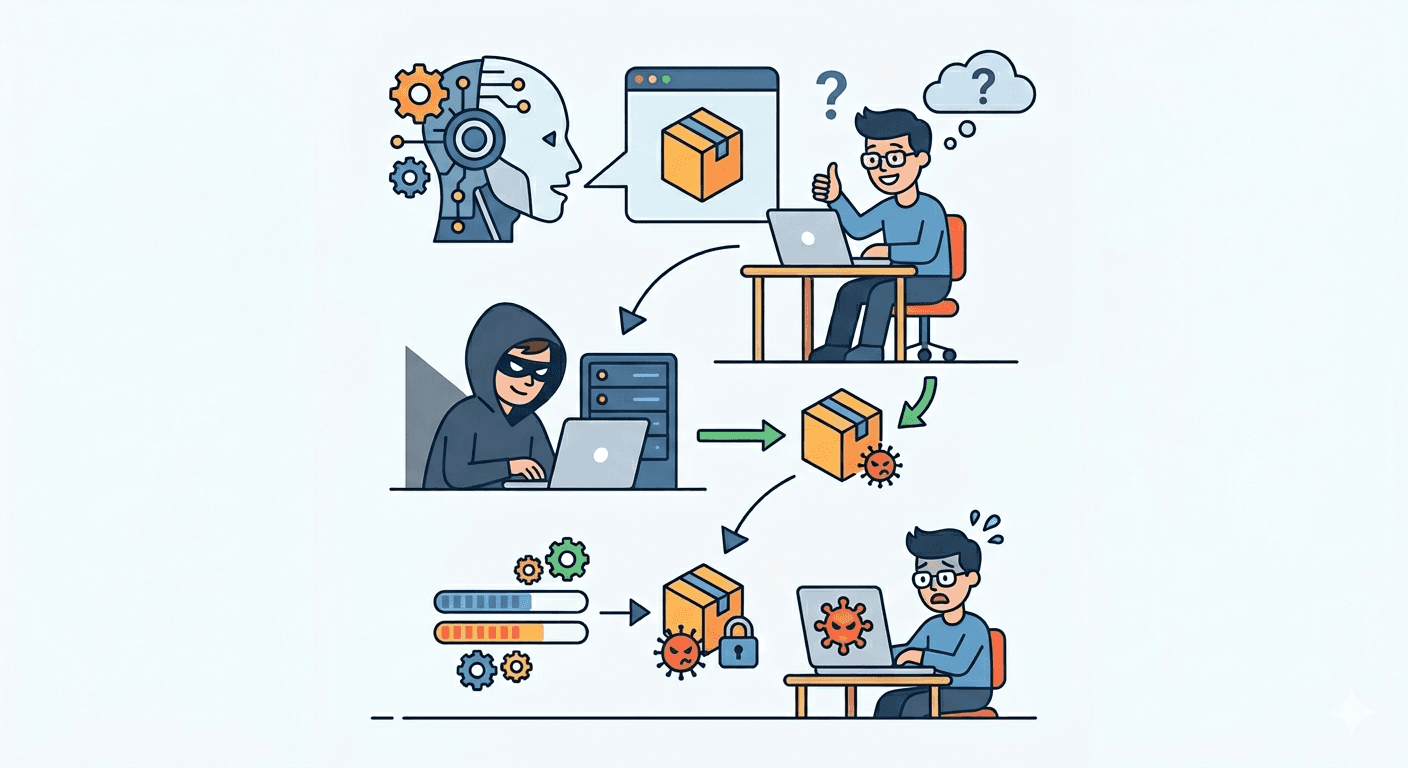
For a simple informational site for a local handyman, the risk is low. For a site collecting client data, processing payments, or running user authentication - the risk is real and expensive.
Problem 3: The Last 10% Is the Hardest Part
Vibe coding is excellent for achieving 90% of a result. The problem is that the last 10% - the difference between "looks decent" and "works professionally" - is the hardest.
- Contact form that sends an email: easy
- Form that validates inputs, handles errors, integrates with a CRM, and sends a confirmation to the client: not so easy
- Page that loads under 2 seconds on mobile: requires optimization AI won't do automatically
- Animations that don't cause layout shifts: requires manual fixes
Harvard Professor Karen Brennan, who taught a course on vibe coding, described a pattern she observed: "Students got stuck in frustrated loops: prompting AI for something, AI producing something not quite right, and students being unable to fully articulate the problem and what to change."
Problem 4: Code Nobody Understands
AI generates different patterns for similar problems, even within the same session. Ask for a function on Monday and you get one approach; ask for something similar on Wednesday and you might get a completely different one. Neither is wrong, but mixing them creates confusion that compounds every month.
When you want to make changes a year from now - add a new service, update pricing, integrate a booking system - you're facing code that's difficult to understand even for an experienced developer. And charging for those changes will cost more than if the site had been built cleanly from the start.
Problem 5: Generic Output
AI generates sites based on patterns from billions of existing websites. The result: AI-generated sites tend to look similar. Same layouts, same proportions, same section types.
For industries where differentiation matters - medical aesthetics, high-end restaurants, boutique agencies, luxury real estate - a site that "looks like AI" can actively damage your brand perception.
Comparison: Vibe Coding vs. Professional Agency
| Criterion | Vibe Coding | Professional Agency |
|---|---|---|
| Delivery time | Minutes-hours | 3-8 weeks |
| Cost | $0-$50/month | $2,000-$10,000 upfront |
| SEO | Weak, generic | Deliberate strategy |
| Design uniqueness | Limited | Full customization |
| Code security | Risky (45% vulnerability rate) | Controlled and reviewed |
| Scalability | Difficult | Planned from the start |
| Post-launch support | None or limited | Technical care plan |
| Conversion (inquiries) | Unpredictable | Designed intentionally |
Who Should Use Vibe Coding - and Who Shouldn't
Makes sense when:
- you're testing a concept before committing to professional investment
- you need a simple informational site with no SEO ambitions
- budget is severely constrained and there's no other option
- you're building a short-term landing page for a specific campaign
- you're a developer using vibe coding to accelerate your own workflow
Doesn't make sense when:
- the site needs to generate leads through Google (SEO)
- you're running an online store or collecting client data (security)
- your brand differentiation and professional image matter
- the site should support sales, not just "exist on the internet"
- you plan to expand the site with new features over time
Should Web Developers Be Worried?
Short answer: no. Longer answer: they need to adapt.
Vibe coding eliminates the most repetitive, lowest-skill work - generating a layout, building basic HTML structure, creating a simple form. This is the part of the job a good developer did fastest anyway.
What vibe coding can't replace:
- strategy - deciding what the site should achieve and for whom
- SEO - deliberate optimization for specific search terms and user intent
- conversion design - building user journeys that turn visitors into clients
- security auditing - reviewing code for vulnerabilities and sensitive data exposure
- system integration - connecting the site with CRMs, booking systems, payment processors
- accountability - someone who owns the site, responds when things break, and keeps it running
Simon Willison, creator of Datasette, put it plainly: "Vibe coding your way to a production codebase is clearly risky. Most of the work we do as software engineers involves evolving existing systems, where the quality and understandability of the underlying code is crucial."
Professional web builders aren't disappearing. But those who only knew how to "assemble templates" will face pressure. Those who understand strategy, SEO, and conversion have more work than ever.
What This Means for You as a Business Owner
Vibe coding is a tool. Like any tool - used in the right context, it works well. Used in the wrong context, it causes problems.
If you need a simple informational site and don't have the budget - try it. Framer AI, Wix AI, and similar tools are genuinely getting better.
If your site needs to generate clients from Google, represent your brand professionally, and work for your business for years - vibe coding isn't enough. Not because developers want to protect their jobs. But because a site that doesn't rank in Google, doesn't convert visitors, and breaks with every update isn't an investment. It's a cost.
The question isn't "should I use AI to build a website?" The question is: "what outcome do I need, and what does it actually take to achieve it?"
Frequently Asked Questions
What is vibe coding? Vibe coding is building software and websites by describing what you want in plain language, without writing or understanding the generated code. The term was coined by OpenAI co-founder Andrej Karpathy in February 2025 and was named Collins English Dictionary's word of the year for 2025.
Will vibe coding replace web developers? No - but it will change their work. Vibe coding eliminates simple, repetitive tasks. It doesn't replace SEO strategy, conversion design, security auditing, or system integration. Developers who understand these areas are in high demand.
What are the best vibe coding tools for websites in 2026? The most popular include Framer AI (excellent for marketing sites), Wix AI (easiest to use), Webflow AI (more design control), Base44, Bolt, and v0 from Vercel (for more technical projects). Every major tech company is entering this space.
Will an AI-built website rank well in Google? Generally not - without additional optimization. AI generates sites for appearance, not for search. Lack of keyword strategy, generic meta tags, and non-specific content mean vibe-coded sites rarely rank for valuable search terms.
How much does vibe coding a website cost? Vibe coding tools typically cost $0-$50/month (or a one-time fee). Much less than a professional agency ($2,000-$10,000+). However, hidden costs - poor SEO, insecure code, forced rebuilding within a year - can easily exceed the savings.
Can I use vibe coding to test an idea before commissioning a professional site? Absolutely - and that's one of the best use cases. Generate a prototype in an hour, validate the concept, then commission professional work when you're ready to invest properly.
Need a website that doesn't just exist online but actually generates client inquiries? Explore our services - we build websites optimized for SEO and conversion, with code we understand and take responsibility for.
Related articles
Website for Electricians and Plumbers - How to Get More Jobs from Google
What should a trade website include? How to rank in Google Maps and win more jobs from search? A practical guide with specific steps for electricians and plumbers.

Will AI Replace Web Developers? What 2026 Data Shows
AI website builder or web agency - which do you actually need? Here's what 2026 data says about AI in web development and when it's worth hiring a professional.

Physiotherapy Website & SEO Guide: Get More Patients from Google
What does a physio clinic website actually need - and how do you rank on Google in 2026? A practical guide to SEO for physiotherapists.