Headless CMS for modern business websites – 2026 guide
Discover the best headless CMS platforms for businesses in 2026! A complete guide to choosing a solution that will speed up your website and boost conversions.
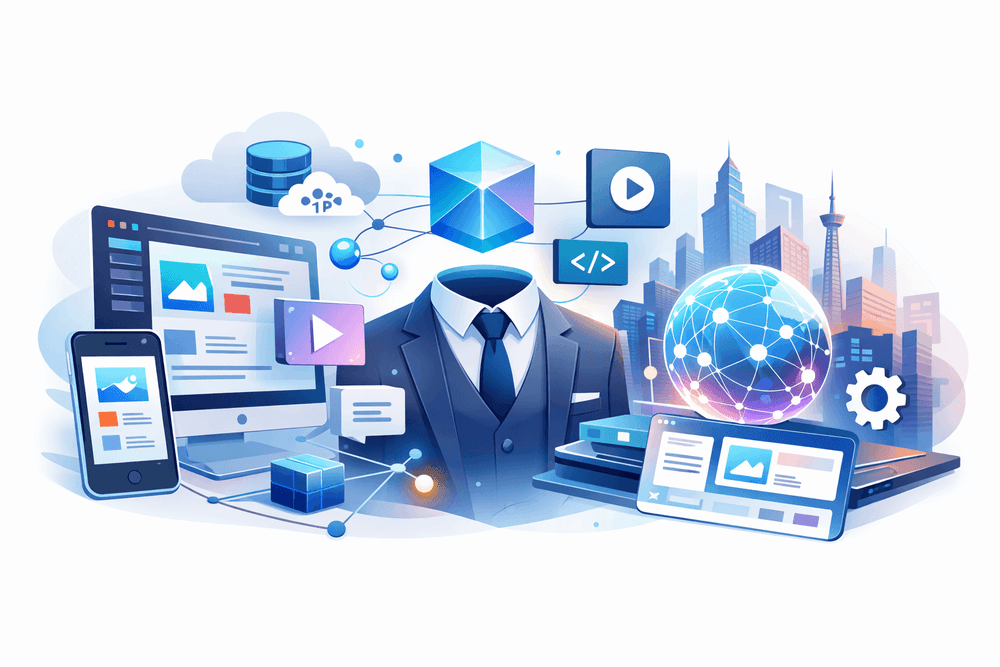
A headless CMS for businesses is a solution that revolutionizes how we think about websites and web applications. Unlike traditional content management systems, headless architecture separates the content management layer from the presentation layer, offering unprecedented flexibility and technological capabilities.
This technology is gaining popularity among companies that need modern, fast, and scalable digital solutions. Why? Because a headless CMS enables content delivery across multiple channels simultaneously — websites, mobile apps, IoT devices, or digital signage systems.
What exactly is a headless CMS and how does it differ from traditional systems?
A headless CMS is a content management system without a predefined frontend. This means it does not include a built-in presentation layer — the “head” — hence the name “headless.” Content is delivered via APIs (Application Programming Interfaces), allowing developers to freely design user interfaces.
Traditional CMS platforms like WordPress or Drupal combine content management and presentation in a single monolithic solution. In contrast, a headless CMS separates these functions, creating a microservices-based architecture.
Key architectural differences
In a traditional CMS, an editor adds content that is then rendered using predefined templates. In a headless CMS, content is also added by editors but stored in a database and delivered via API. The frontend can be built using any technology — React, Vue.js, Angular, or even traditional PHP.
This separation means a single headless CMS instance can serve multiple interfaces at once — a website, mobile app, newsletter, or even a chatbot.
Main advantages of headless CMS for modern businesses
Unlimited technological flexibility
A headless CMS allows developers to use the latest frontend technologies without system constraints. Companies can choose tools that best fit their needs rather than those imposed by the CMS.
The ability to integrate with any marketing tools, CRM systems, or e-commerce platforms without technological compromises is a major advantage in today’s complex digital ecosystem.
Exceptional performance and speed
Websites built with a headless CMS often load significantly faster than traditional solutions. This is due to the use of modern technologies like static site generation (SSG) or server-side rendering (SSR).
Page load speed directly impacts Core Web Vitals and Google rankings, which are critical for online success.
Omnichannel capabilities and future-proofing
A headless CMS makes it easy to deliver content across multiple platforms from a single source. This allows businesses to manage websites, mobile apps, digital signage systems, and IoT devices simultaneously.
In an era where Google is evolving under the influence of AI, having a flexible architecture enables companies to quickly adapt to new distribution channels.
Better scalability and security
Headless architecture allows independent scaling of backend and frontend systems. The backend can handle massive amounts of content, while the frontend can be distributed globally via CDN.
Layer separation also improves security — attackers do not have direct access to the content management system through the frontend.
Most popular headless CMS platforms in 2026
Commercial solutions
Contentful remains a market leader thanks to its intuitive interface and powerful API. It offers advanced team management features, publishing workflows, and integrations with popular tools.
Sanity is gaining popularity due to its flexible content schema and real-time collaboration. Developers especially appreciate its customizable admin interface.
Strapi is an open-source alternative that provides full control over hosting and data — ideal for companies needing GDPR compliance.
Open-source solutions
Ghost, originally created for bloggers, has evolved into a full-fledged headless CMS with strong SEO and membership features.
Directus offers automatic API generation from existing databases, making it ideal for companies migrating from legacy systems.
When is a headless CMS the right choice for your business?
Ideal scenarios for headless CMS
A headless CMS is particularly effective if your company plans to operate across multiple digital channels simultaneously. It works best for:
- Large enterprises with multiple brands requiring different presentations of the same content
- E-commerce companies needing integration with advanced product management systems
- Organizations requiring high performance and availability
- Projects requiring custom functionality not possible in traditional CMS
When a traditional solution might be better
Not every business needs the complexity of a headless CMS. When choosing between WordPress and a custom-built solution, it’s worth considering simpler options if:
- Budget is limited and fast deployment is a priority
- Your team lacks advanced technical expertise
- Requirements are simple — a single website with no expansion plans
- Time-to-market is critical
It’s also important to consider the cost of maintaining a website, which may be higher than with traditional systems.
Challenges and potential issues
Technical complexity
Headless CMS requires a team with advanced technical skills. Developers must understand both backend (API) and frontend technologies (React, Vue.js).
This can result in higher development costs and challenges in hiring suitable specialists.
Higher initial costs
Implementing a headless CMS often requires a larger upfront investment compared to traditional solutions. The difference between a $250 website and a $2,500 one can be especially noticeable in headless projects.
Lack of ready-made templates
Unlike WordPress or other traditional CMS platforms, headless systems do not offer ready-made themes. Every interface element must be designed and developed from scratch.
Technology trends shaping the future of headless CMS
Artificial intelligence and automation
AI is transforming content management in headless systems with features like:
- Automatic tagging and categorization
- SEO metadata generation
- Real-time content personalization
- Automated multilingual translations
These innovations help businesses manage large volumes of content more efficiently.
Edge computing and CDN
Modern headless CMS platforms increasingly leverage edge computing. Solutions like Vercel Edge Functions or Cloudflare Workers allow content to be rendered closer to end users.
This results in faster load times and improved user experience worldwide.
JAMstack and static site generators
The JAMstack architecture (JavaScript, APIs, Markup) aligns perfectly with headless CMS. Static site generators like Next.js, Nuxt.js, or Gatsby enable ultra-fast websites enhanced with dynamic API-driven features.
Composable commerce
Composable commerce involves building e-commerce platforms using microservices. Headless CMS plays a key role by managing product and marketing content within this architecture.
How to choose the right headless CMS solution?
Business needs analysis
Before selecting a platform, conduct a thorough analysis of your needs:
- How many content distribution channels are planned?
- What is the expected website traffic?
- Are advanced publishing workflows required?
- Who will manage the system?
Technical capabilities of your team
Headless CMS requires specific technical skills. If your company lacks an internal development team, consider working with a specialized agency.
Budget planning
The cost of building a website in 2026 based on a headless CMS can exceed traditional solutions. Be sure to include:
- CMS platform licensing
- Development costs
- Hosting and infrastructure
- Long-term maintenance and growth
Headless CMS implementation — best practices
Architecture planning
Careful planning of content structure and APIs is essential. Data models should be flexible but consistent and logical.
It’s also important to consider SEO and URL structure from the beginning to avoid costly mistakes.
Content migration process
Migrating from a traditional CMS requires careful planning:
- Mapping existing content to the new structure
- Preserving SEO and search rankings
- Setting up redirects
- Testing functionality after migration
Team training
Headless CMS interfaces can differ significantly from traditional systems. Content teams need proper training and documentation.
The future of headless CMS — outlook for the coming years
Democratization of technology
Headless CMS platforms are becoming more accessible to smaller businesses thanks to no-code and low-code solutions. Platforms like Forestry or TinaCMS enable managing headless systems without deep technical knowledge.
Integration with business tools
The future lies in deeper integration with business ecosystems — CRM, ERP, and marketing automation — enabling unified content management across the entire customer journey.
Standardization
The developer community is working on API standardization for headless CMS. Projects like GraphQL Content Mesh aim to simplify system integration.
Summary — is headless CMS the future for your business?
Headless CMS can deliver significant benefits, but it requires the right approach and resources. Success depends on a realistic assessment of business needs and technical capabilities.
Companies planning multi-channel digital expansion, requiring high performance, or needing custom technological solutions can greatly benefit from adopting headless architecture.
However, for simpler projects, traditional solutions may be more cost-effective and faster to implement.
Regardless of the choice, the key is building a website that actually converts and delivers real value to users. Technology should serve business goals — not the other way around.
Related articles
Claude Opus 4.7: What the New AI Model Means for Your Business
Claude Opus 4.7 launched today. What changed, how it differs from Opus 4.6, and what it means for business owners - a practical breakdown without the technical jargon.
AI Chatbot on Your Website - When It's Worth It (And When It's a Waste of Money)
Everyone says you need an AI chatbot. For half of businesses, it's a bad investment. Here's when it pays off - and when to skip it. Real 2026 pricing included.
What Is llms.txt? The AI Website Standard Explained (2026 Guide)
robots.txt was for Google. sitemap.xml was for crawlers. llms.txt is for AI. Here's what it does, whether it actually works, and how to add it in under an hour.